LanguageREACH

The Problem and Solution

Having a working understanding of the local language is crucial for cultural integration. LanguageReach for English addresses this need by providing practical language skills to intermediate and upper-intermediate English learners through a flexible, immersive learning environment. This story-driven eLearning platform arose from nuanced discussions with language learners and experts, highlighting the necessity for real-life scenarios to enhance language skills. By integrating the lexical approach, LanguageReach emphasizes learning common phrases and word combinations, significantly improving speaking proficiency and vocabulary retention. The platform utilizes technology-enhanced language learning tools to create interactive experiences and includes role-play sessions via video conferance for practical application and assessment. These methods equip ESL learners with the necessary tools to thrive in English-speaking environments, enhancing their personal and professional opportunities.
Experience The Project

My Process

Leveraging the ADDIE model, I began with an in-depth analysis, drawing on my background as a language consultant, and dove into modern pedagogical strategies to enhance language acquisition. Collaboration with subject matter experts in language education helped refine the educational content, focusing on teaching English through lexical 'chunks,' collocations, and vocabulary rooted in everyday scenarios. The project then advanced to story mapping, text-based storyboarding, visual mock-ups, iteration, and finally, building the first module prototype for further research. However, the process was not linear. As the project became more content-rich through reflection and feedback, many steps required revision, similar to other development models.

Story Mapping

After discussing the project with subject matter experts, I decided to base the learning on a narrative about a woman adjusting to life in an English-speaking country. This story-driven approach helped situate the language content within relatable, real-life situations, making the learning experience engaging and practical for the learner. A module-based approach organized the language content sequentially, allowing learners to follow the protagonist's journey and immerse themselves in the scenarios.

Several iterations and deep dives into practical scenarios ensured the content would benefit the target learners while leveraging the platform's unique capabilities. This iterative process included continuous feedback and reflection to refine the scenarios and ensure they were relevant and practical. Once the framework was solid, I began writing the text for the story, embedding language lessons and vocabulary within the narrative to create an immersive and cohesive learning experience.

Text-Based Storyboard

In developing an ESL scenario-based learning platform, I consistently referred to the lexical approach, emphasizing the importance of teaching vocabulary chunks, collocations, and phrases. This phase involved transforming the story map into a detailed storyboard. Adhering to multimedia learning principles, such as Mayer's Cognitive Theory of Multimedia Learning, and the objectives of Bloom's Taxonomy, I wrote and conceptualized interactive scenarios that promote social interaction and language application.

These scenarios were designed to be flexible, educational, enjoyable, and engaging, in line with adult learning theories like Knowles' Andragogy, emphasizing the need for self-directed learning and practical application. The feedback system within the platform was developed by integrating various learning theories, including Shute's Formative Feedback for its emphasis on timely, specific, and clear feedback; Behaviorist Theory (Skinner) for using positive reinforcement to encourage desired behaviors; and Constructivist principles to support learners in building their understanding through interactive guidance.

The story content and feedback mechanisms were designed to highlight flexibility, catering to adult learners' diverse needs and preferences, as suggested by Knowles' Andragogy theory. The storyboard underwent numerous reviews and iterations, incorporating principles from cognitive load theory to ensure the material was manageable and effective. This approach, which aligns with micro-learning principles, was critical in ensuring alignment with the project goals and maintaining a high level of learner engagement and retention.

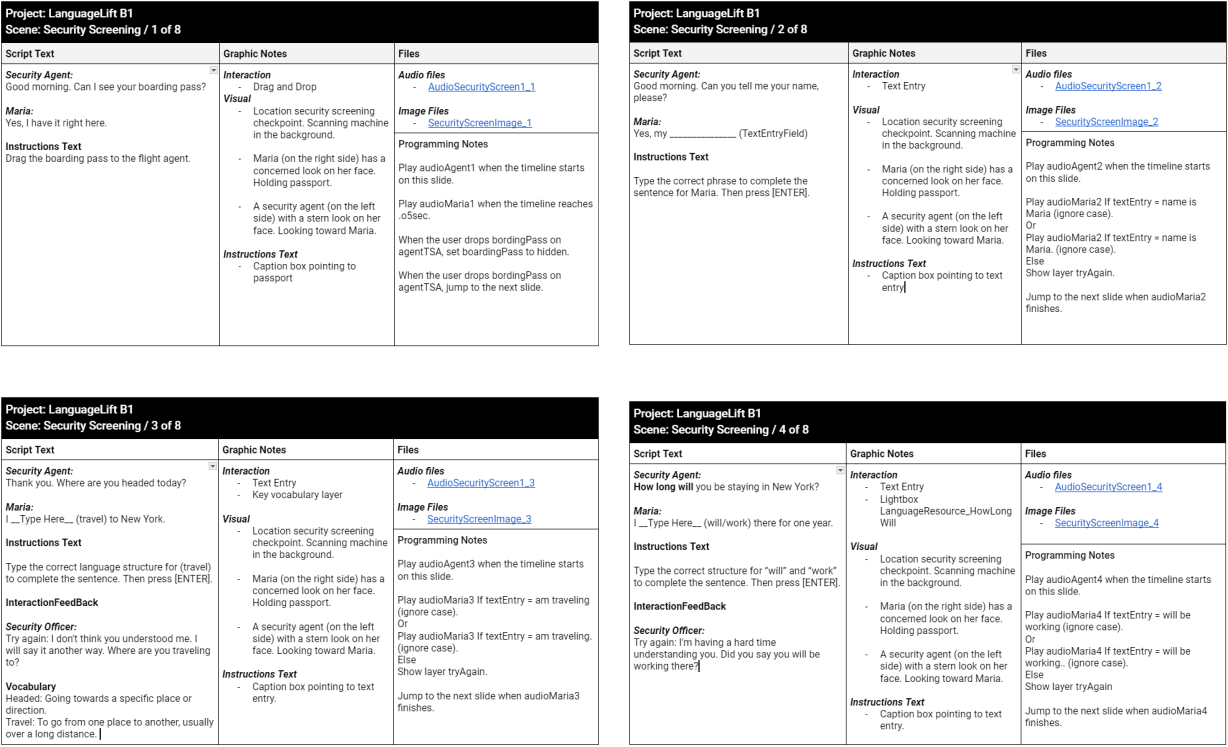
Above are examples of the text-based storyboards, which helped guide the visual design within Articulate 360. The text scripts were written along with graphical notes, audio and image file links, and programming notes for triggers and additional JavaScripts to enhance the platform's performance and usability.

Visual Mockups

After finalizing the storyboard, my main goal was to create a style and user interface that promotes confidence, enthusiasm, warmth, and playfulness. To achieve this, I incorporated comic-style characters into real-life images, enhancing the learning experience and making it engaging and incredibly immersive.
To enhance immersion further, I utilized Figma to build low-fidelity wireframes and structured the scenes within a frame to create layers of depth in both place and character. I could use this design to guide learners' attention and facilitate interactions that mimic real-world scenarios. Throughout the project, I cam back to wireframming several times as the content grew and the UI and UX needed further enhancement.  Below I capture some of the processes in wireframe development and complexity as the project grew.

The low-fidelity wireframes I used as the foundation for basic scene structure, feedback mechanisms, and assessment formats. You can also see a conceptual view of the place and character depth designed to draw the learner in for a more engaging experience.
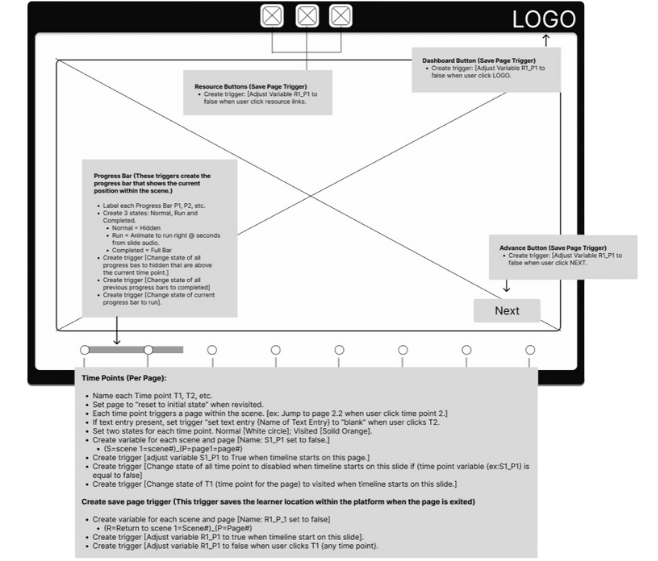
This example of Higher-fidelity mockup was to visualize the setup and triggers needed to achieve a fully functional navigation bar within the platform. As the learners are immersed in a native-speaking level environment, the ability to rewind, replay, or even advance through the lessons while maintaining the platform's integrity was necessary.

The navigation bar below allows users to move forward and backward through the lessons, but only after each lesson is completed. Additionally, it includes features to reset the scene, reset text inputs, and save the scene when the lesson is exited. These mockups ensured the navigation system's usability and reliability, providing a blueprint for implementing these complex interactions and behaviors.

Pilot Project Development

I wanted a real feel for the platform, so I jumped into Articulate Storyline 360 to build an interactive prototype. This prototype allowed me to test and refine the educational methodology and the platform's functionality. Throughout this process, I consistently sought feedback from designers to ensure the visuals were consistent and aligned with the project's objectives. I could better convey the concept to subject matter experts (SMEs) for their feedback by incorporating elements like triggers, animations, and voiceovers. These interactive elements were crucial for creating an immersive learning experience, as they simulated real-world scenarios and guided learners through the lessons engagingly.
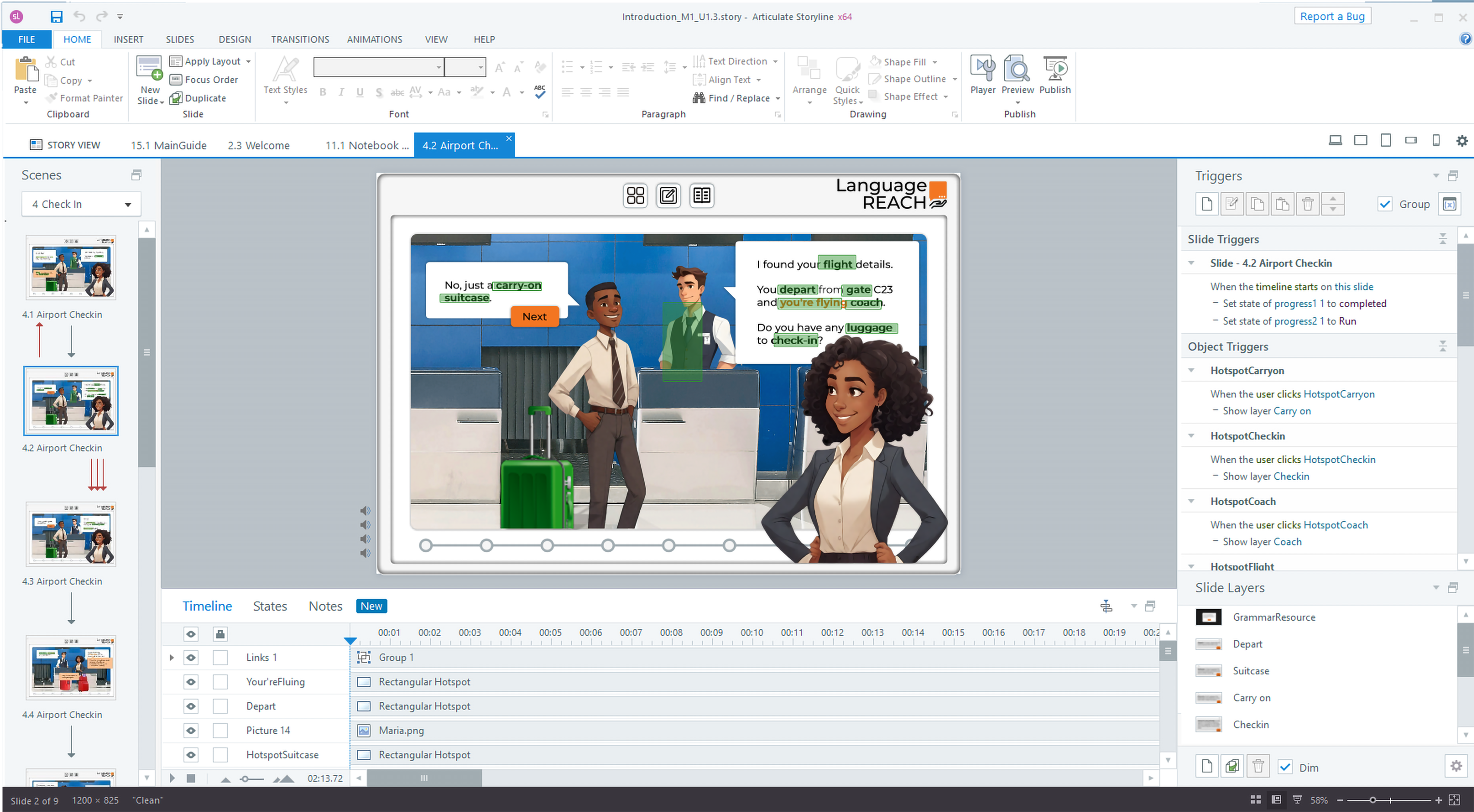
Feedback from SMEs was invaluable, highlighting the need for a research study to analyze the platform's usefulness. In complete agreement, I began integrating xAPI statements within the scenes to collect quantitative data on user interactions.I created xAPI extensions to help query more specific learner interactions than those out-of-the-box in Storyline. This data would provide insights into how learners engage with the platform, which aspects were most effective, and where improvements could be made.

Additionally, I started outlining a format for online face-to-face role-play sessions that would accompany LanguageReach. These sessions are designed to complement the eLearning modules by providing live practice opportunities. The concept is to use the data gained from the xAPI statements to individualize these practical classes for each learner, addressing specific language difficulties and assessing the overall effectiveness of the platform.

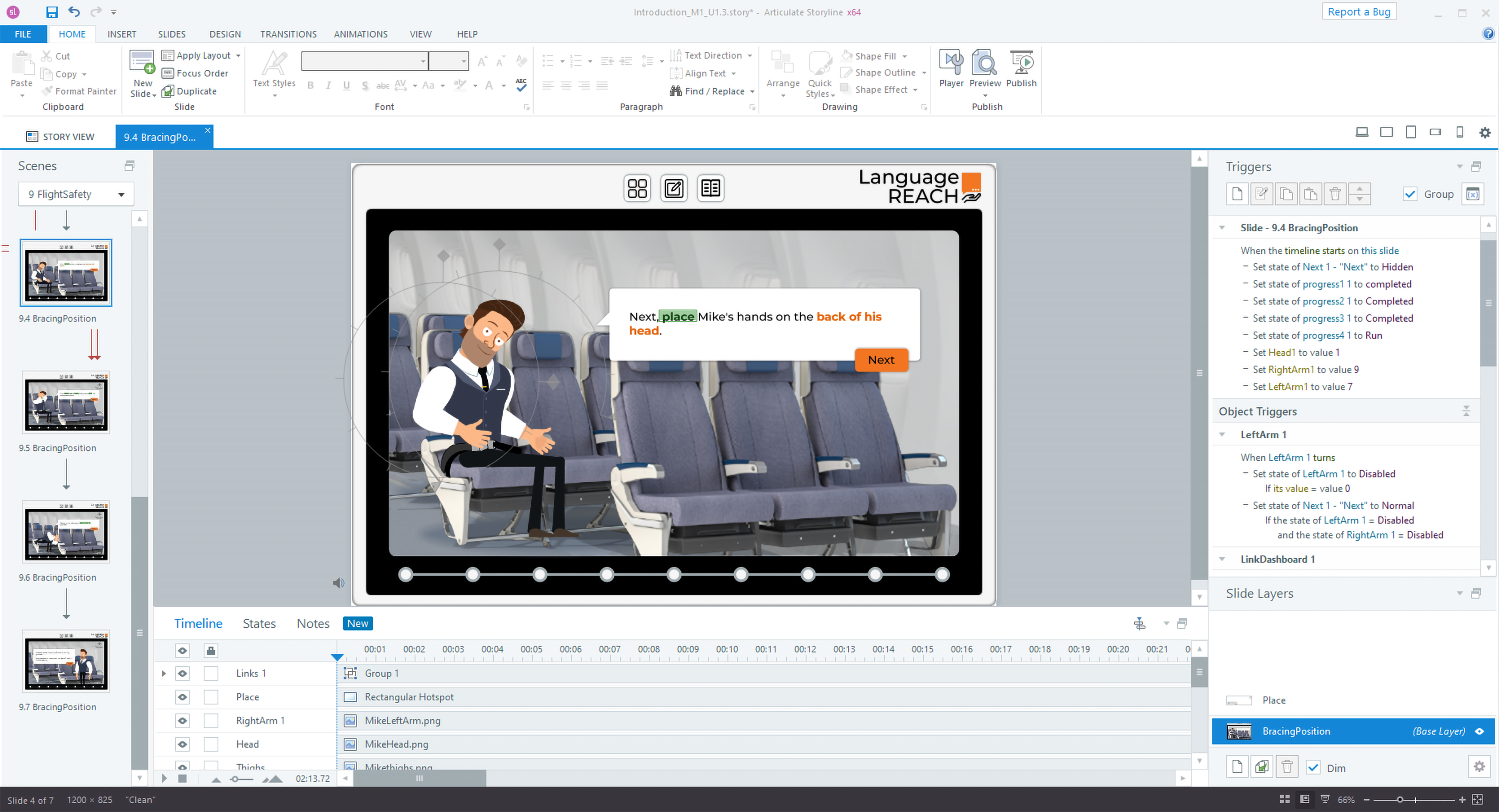
One of the core principles of the LanguageReach platform is to make learning hands-on and highly engaging. By prototyping, I was able to integrate interactive elements beyond traditional language learning methods. For example, instead of merely learning the names of body parts used in a flight safety activity in isolation, learners engage in a practical activity where they apply this vocabulary in a real-world scenario.

In one module, learners assist "Mike," a virtual airline attendant, with positioning his body correctly in the bracing position for air safety. This task is accomplished using a set of dials with images and triggers. Learners must select the correct body parts and move them into the right positions, mimicking a flight attendant's instructions. This interactive approach reinforces the lesson concepts and ensures that learners can apply their knowledge in practical, meaningful contexts.
Pilot Project Development

The final phase involved applying the insights from the prototype feedback to enhance the educational content and user experience. Adjustments included:

- More language-level dialogue.
- More refined lexical targets.
- Additional reinforcement activities.
- Consistency in design.

The first module has been fully developed, and LanguageReach recently completed a pilot study to evaluate the project's effectiveness as a language-learning resource. The intervention plan, which included collecting quantitative data via xAPI, provided detailed insights into user interactions and learning outcomes.

Currently, I am querying the collected data using Veracity's Learning Record Store (LRS) and Learning Management System (LMS) to compile and analyze the results. Preliminary analysis suggests promising trends in learner engagement and language acquisition. The next steps involve a thorough review and analysis of this data to identify specific areas of success and opportunities for improvement.

An outreach campaign was conducted to recruit a diverse range of participants, ensuring that the data reflects a wide range of learner experiences and backgrounds. This inclusive approach has provided a robust dataset that will help validate our educational strategies and guide future development.

Findings from the LanguageREACH pilot study will be posted in the next couple of weeks. These results will offer valuable insights into LanguageReach's effectiveness, demonstrating its impact on language learning and informing future developments to serve ESL learners better. Upon completion of the study, I will develop a comprehensive white paper detailing the research findings and imp
Experience The Project

Get In Touch

Do you have any thoughts or feedback on the languageReach project?

Reach out and send me an email. I'd love to hear what you think!
Reach Out